

The Algorithm Decided Your Personality. Did You Notice?
On the death of personal taste, the rise of niche aesthetics, and the slow disappearance of knowing what you actually like.

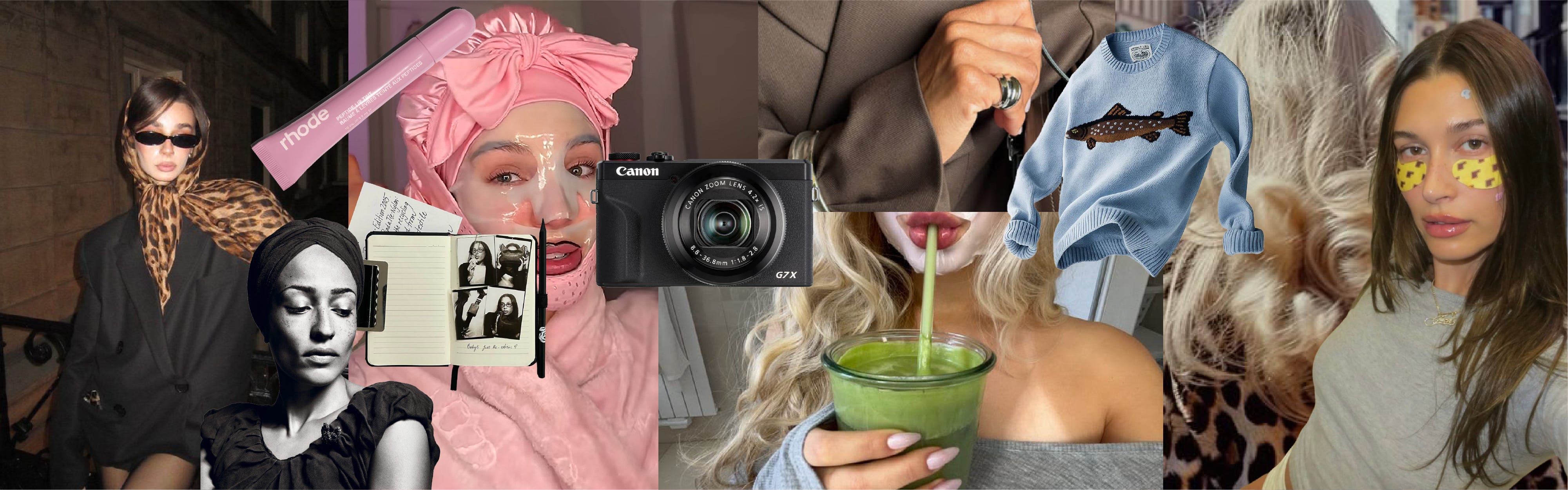
At some point in the last decade personal taste stopped being something you developed and became something you selected. Like a filter, a category, an aesthetic. You did not grow into it slowly through the books you read and the cities you got lost in and the music you found before anyone told you to find it.
Coastal aunt. Clean girl. Old money. Eclectic grandpa. Quiet luxury.
Each one a complete identity available for immediate download — the wardrobe, the apartment, the morning routine, the values, the version of yourself that goes with it. No assembly required. No self-examination necessary. Just add to cart.
The Aesthetic Industrial Complex
In 2014 the word aesthetic entered the internet’s vocabulary as a noun. You did not have good taste. You had an aesthetic. And the difference matters more than it sounds.
Before that, there was Tumblr. One aesthetic. Singular. Grainy film photography, flower crowns, soft grunge, Lana Del Rey lyrics in white text on a dark background. Moody and specific. It felt like a subculture because it was one.
Then the platforms scaled and the aesthetics multiplied. Cottagecore. Clean girl. Coastal grandmother. Old money. That girl. Quiet luxury. Mob wife. Coquette. Each one arrived, dominated For You pages for approximately four to six months, colonized everyone’s wardrobes and apartments and playlists, and then receded to make room for the next one. The hashtag #aesthetic alone has 364 billion views on TikTok. The appetite for a pre-assembled identity is not a niche interest. It is one of the defining cultural forces of the last decade.
What the aesthetic gave us was a shortcut to identity. Instead of the slow, sometimes uncomfortable process of figuring out what you actually respond to, you could select a category and fill your life accordingly. The question of what you genuinely like became almost impossible to answer because you had never had to sit with it long enough to find out.
What Is Actually Happening
In 2022 researchers at Cornell University published a study on what they called aesthetic contagion — the phenomenon where repeated exposure to a particular visual style increases your preference for it regardless of any prior affinity. The more the algorithm shows you something, the more you think you like it. Not because it resonates with something true about you. Because repetition creates the feeling of familiarity and familiarity creates the feeling of preference.
This is not a glitch. It is the entire business model.
TikTok’s recommendation algorithm identifies micro-preferences (the half second longer you spent on one video, the pause before the scroll, the rewatch) and builds a model of you that is optimized for engagement, not authenticity. It does not show you what you like. It shows you what you will watch. Those are not the same thing. But after enough time on the platform they start to feel like they are.
The result is a generation of women who can tell you exactly what their aesthetic is and have genuine difficulty telling you what they actually find beautiful when nobody is watching.
The Homogeneity Problem
There is a scene in The Devil Wears Prada that has been misread for twenty years. Miranda Priestly’s cerulean speech is usually interpreted as a takedown of fashion and its gatekeepers. But she is making a different point. Taste has always trickled down. The algorithm did not invent this. It just made it faster, flatter, and available to everyone simultaneously.
Trends used to take years to move from runway to street. You had time to encounter something, sit with it, decide if it actually spoke to you before it was everywhere. Now the cycle moves in weeks. By the time you have bought “the thing” it is already over and the algorithm is already serving you the next one and you are already adding it to your cart before you have asked yourself whether you actually want it or whether you have simply been shown it enough times that the two have become indistinguishable.
Walk into any apartment belonging to a woman between twenty five and thirty five in any major city right now and you will find roughly the same things. The boucle chair. The arched mirror. The clean girl white linen duvet. The neutral palette. The candle from a brand with minimalist packaging that costs more than it should.
This is not a coincidence. It is the algorithm’s most visible achievement.
Novelist Zadie Smith wrote in Feel Free about the difference between liking something and being the kind of person who likes that kind of thing. The woman who gua sha’s her face because the ritual genuinely grounds her morning is different from the woman who does it because TikTok told her it means she is in her wellness era if she does it. One is a genuine response. The other is a costume. The algorithm has made it very hard to tell which one you are.
Personal taste used to be the thing that made you specific. The cheap vintage find styled with the designer piece. The song nobody else in your circle knows. The restaurant that is not actually beautiful but is yours.
The algorithm needs you to be a category. The clean girl is matcha and pilates and lemon water and nothing that contradicts the mood board. But real women with depth exist in the in-between. Somewhere between the cigarette and the tofu. The dirty martini and the 6am workout. The algorithm cannot hold that contradiction. So it flattens it. And eventually, if you let it, it flattens you.
You are always arriving somewhere that has already been discovered. The question is whether you noticed when you stopped looking on your own.
The Unalgorithmed Self
Turn off the algorithm for long enough to hear yourself think.
Not permanently or dramatically. Just intentionally. Go to a bookshop and buy something nobody recommended. Eat at the restaurant with no aesthetic and no press (and don’t post it on your Instagram story). Put on the piece you love and have stopped wearing because it does not fit any current category. Listen to the song that moves you even though it is not the kind of music you are “supposed” to like.
Notice what happens when you remove the external validation. Notice whether you still want the thing when nobody will see it.
Taste is not an aesthetic. It is the accumulation of genuine responses to things you have actually encountered on your own terms. It is slow and specific and deeply, irreducibly yours. The algorithm cannot give it to you.
But it can absolutely take it away if you let it. And the question worth asking is whether you have already noticed that it has.
So, who were you before the algorithm told you who to be? Start there.
All about muting the external validation! Love it
Beautifully said 👏🏼